Showing posts with label Mammals. Show all posts

Wednesday, April 12, 2017

Sea Creature Spotlight: Hawaiian Monk Seal

0


Hawaiian monk seal (source)


Hawaiian monk seals

This sea creature spotlight is about the Hawaiian monk seal. This seal is endangered (learn more about endangered species). I like the Hawaiian monk seal because it is an amazing creature. It is sad, in my opinion, that it is endangered and so I wanted to learn more about these beautiful creatures.

How many types of monk seals are there?
Monachus monachus.jpg
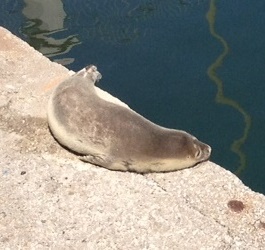
Mediterranean monk seal (source)
There are two types of monk seals. One is the Hawaiian, while the other is the Mediterranean monk seal.

Forgotten relative?

The Hawaiian monk is thought to have an extinct type of monk seal relative called the Caribbean monk seal.

Where exactly do Hawaiian monk seals live?

Their name gives away where Hawaiian monk seals live, but since Hawaii is made up of lots of islands. Here's a look at where exactly you will find Hawaiian monk seals...

Monks seals leave entirely in U.S. waters surrounding the Northwestern Hawaiian islands, primarily in the Papahānaumokuākea Marine National Monument area.  According to the Marine Mammal Center, there are six main breeding subpopulations in this area.


You'll likely find Hawaiian monk seals at:

  • Kure Atoll
  • Midway Islands
  • Pearl and Hermes Reef
  • Lisianski Island
  • Laysan Island
  • French Frigate Shoals


  • Did you know??

    Something cool about the Hawaiian monk seal is that they are the only seal native to Hawaii.

    The ancient Hawaiian name for Hawaiian monk seals, llio holo l ka uauameans "dog that runs in rough water."

    Monk seals get their name from their resemblance to monks... they have bald heads, sometimes have solitary habits, and they have a little fold of skin that looks like a monks hood!

    They spend much of their day sleeping and they hunt at night. They eat things like fish, lobster and octopus.

    Watch Hawaiian monk seals...

    Learn more about Hawaiian monk seals and what you can do to help them in this video from NOAA:


    Thanks for learning about Hawaiian monk seals with me!

    I think they are very interesting and cool! I feel we should do our part to protect them and I hope you do too!



    Read More »

    Monday, March 27, 2017

    Sea Creature Spotlight: Manatees

    0


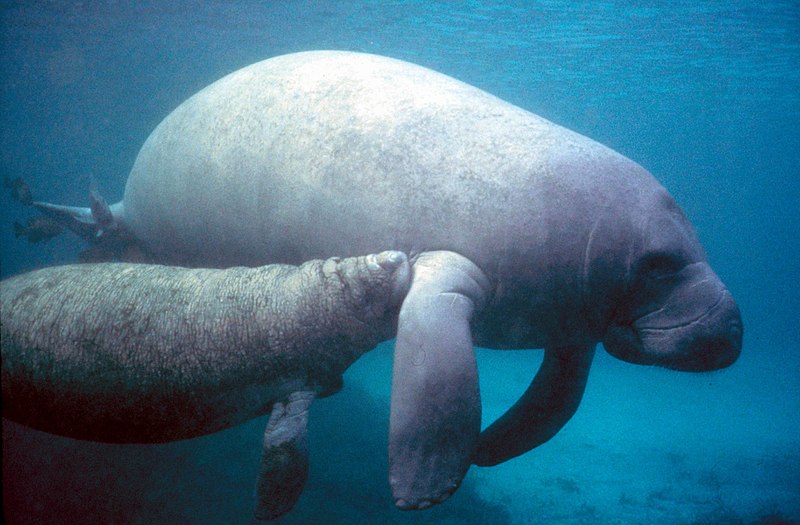
    Manatee (source)
    This Sea Creature Spotlight is about one of my favorite water mammals, the manatee.  I like manatees because I like that they seem to be gentle giants and I love their little wrinkled faces!

    On a family vacation our family went to Crystal River, FL and I had the chance to see manatees in real life! I will share more about that in another post because today I mainly want to share some facts with you about these fascinating creatures.


    What Kinds Of Manatee Are There?
     
    There are 3 types of manatee. They are:
    1. West Indian Manatee (this is the one that lots of people here in the U.S. are familiar with)
    2. Amazonian Manatee
    3. West African Manatee

    West African Manatee
    West African Manatee (Source)
    West Indian Manatee
    West Indian Manatee (Source)
    Amazonian Manatee
    Amazonian Manatee (Source)


    What Do They Look Like?
     
    Even though there are three different types of manatee, they all look pretty similar. All three species are large grayish-brown water mammals that have wrinkled skin that is covered in coarse hair. They have two front flippers and one back flipper. They have large whisker snouts and two widely spaced, circular eyes.
      
    About How Big Are Manatees?

    Manatee range from about 8 to 13 ft (2.4 to 4 m) long. Fully grown they weigh from about 440 to 1,300 lbs (200 to 600 kg). Baby manatee weigh about 40-50 pounds and they are around 39-40 inches long.


    Did you know? Looking at a manatee you might think that they are related to a seal or some other sea creature, but did you know the manatee's closest living relative is actually the elephant! Manatees evolved from a distant relative to the elephant over 50 million years ago!


    What Do Manatees Eat?

    Manantees are pretty much herbivores (plant eaters). They spend a big part of their waking hours grazing on plants along shorelines, as well as plants that grow floating on the water and plants that grow under (submerged) the water. They can eat anywhere from 10-15% of their body weight in just one day!

    Where Do Manatees Live?

    Manatee spend their entire lives in water. You can find manatee living near the coast of the Southeastern United States, coastal waters of the Caribbean, Amazon Basin and West Africa.

    You will find manatees in freshwater, saltwater and brackish water. Typically if a manatee lives in one type of water it will stay only in that kinds of water, but that's not the case for one particular type of manatee... Florida manatees are the only manatees that will move from freshwater to saltwater and back and not seem to mind it at all (this is one of my favorite manatee facts because I learned this when I went to visit the manatees in Crystal River, FL).

    How Do Manatees Breathe?

    Even though Manatees live in water, they are mammals and must breathe air. There large wrinkled snout that has a pair of nostrils that can be closed off when the manatee dives. Manatees normally breathe every 2 to 5 minutes, but can stay submerged for as long as 20 minutes if they need to.


    What's That Green Stuff Growing On Manatees?
      
    It's green alien goo!! No... it's algae! Algae likes to grow in wet and sunny spots and so manatees make a perfect home for algae. Why you ask? Well, because manatees live in shallow water and spend a lot of time up close to the surface (where the suns rays are) eating and breathing. The algae doesn't seem to bother manatee and some people even think it might offer some sun protection.  
     
    Fun Fact...

    Manatees are big and gentle and spend their days sort of mozying around eating grass and grazing all day. Remind you of any other sort of mammal? Did you think of a cow? Lots of other must have too because some people refer to manatees as sea cows!

    Are Manatees Endangered?

    Manatees have been on the endangered species list. Here's a bit about that from Wikipedia...

    "As of January 7, 2016, as a result of significant improvements in its population and habitat conditions, and reductions in direct threats, the U.S. Fish and Wildlife Service announced that the West Indian manatee is proposed to be downlisted from endangered to threatened status under the Endangered Species Act (ESA)."

     I hope though that people will still do what they can to protect manatee.

    Manatees do not have any natural predators. In nature, things like toxic algae blooms can affect manatee population. For the most part, threats to manatee are man made. One of the biggest threats to manatees are boat collisions. Since Manatees are slow movers and they spend most of their time shallow water, they can't move out of the way quickly if a boat is coming.

    Fortunately lots of people are working to slow down boats and educate boaters in an effort to help keep manatee safe, but there are still accidents happening. We saw manatee that had scars from boat propellers on our trip to Crystal River. Sometimes researchers even use these scars to catalog and identify manatee in an area.

    Cool Links & Where You Can Learn More...

    The Florida Fish and Wildlife Conservation Commission has a great information page where you can learn more about Manatees and you can also download a fun Manatee activity book.

    Watch Manatees From Your Home!

    There are several web cam set-up that will allow you to watch Manatees from the comforts of your very own home. Here are a few links that our family found:
    Read More »