Showing posts with label Sea Creature Spotlight. Show all posts

Friday, March 9, 2018

Sea Creature Spotlight: Pufferfish

0
Starry Pufferfish (Image Source)

Sea Creature Spotlight: Puffer Fish

This sea creature spotlight is about the puffer fish. The puffer fish is interesting to me because it puffs itself up to scare away enemies.

The puffer fish lives in the Indian, Pacific, and Atlantic ocean. Also, they are usually at most aquariums if you want to see them close.

When I went to the Florida Aquarium (absolutely LOVED the Florida Aquarium), there was a puffer fish who followed us as long as he could follow us. We got some pictures of him/her. I think the puffer fish may have thought we had food with us!

Check him/her out...


Did you know?

 *There are more than 120 types (species) of puffer fish

*One pufferfish contains enough toxin to kill 30 adult humans

*Pufferfish do not have scales, instead they have a thick skin

*They only have four (4) teeth! They belong to a scientific family of fish called Tetraodontidae and some of you may already know this from studying Greek and Latin roots in school, but 'tetra' means four and 'odous' means tooth

*Some baby pufferfish are so small you need a microscope to see them and some grown-ups can get as big as 4 feet long

*Sharks are the only species immune to pufferfish toxins

*They can be found in many different colors

Here's a great example of a pufferfish's defense in action...


Still feeling prickly?

Here are some pufferfish themed activities...


Sources for this article:

http://ipfactly.com/pufferfish/
http://www.softschools.com/facts/animals/puffer_fish_facts/59/


Read More »

Tuesday, November 28, 2017

Sea Creature Spotlight: Dolphins

0
Atlantic Spotted Dolphin (image source)

Sea Creature Spotlight: Dolphins

This sea creature spotlight is all about dolphins! I do not know a person around who doesn't love dolphins. I am not sure if it's because of the way they can majestically leap out of the water, the way they look like they are smiling, the cute noises they make or the fact that they are so intelligent, but whatever reason, dolphins are definitely a favorite ocean creature for many.

A HUGE Family Tree!

 There are 44 species of dolphins. Here is a look at the names of all the different species:

  • Killer Whale
  • Common Bottlenose Dolphin
  • Baiji 
  • Amazon River Dolphin
  • Chinese White Dolphin
  • Risso's Dolphin
  • Striped Dolphin
  • Short-Beaked Common Dolphin
  • Pacific White-Sided Dolphin
  • Irrawaddy Dolphin
  • False Killer Whale
  • Spinner Dolphin 
  • Tucuxi
  • Short-Finned Pilot Whale
  • Commerson's dolphin
  • Pantropical Spotted Dolphin
  • Long-Finned Pilot Whale
  • Indo-Pacific Bottlenose Dolphin
  • Hector's Dolphin
  • Atlantic Spotted Dolphin
  • South Asian River Dolphin
  • White-Beaked Dolphin
  • Dusky Dolphin
  • Rough-Toothed Dolphin
  • Hourglass Dolphin
  • La Plata Dolphin
  • Atlantic White-Sided Dolphin
  • Long-Beaked Common Dolphin
  • Melon-headed Whale
  • Fraser's Dolphin
  • Pygmy Killer Whale
  • Northern White Whale Dolphin
  • Guiana Dolphin
  • Chilean Dolphin
  • Australian Snubfin Dolphin
  • Southern Right Whale Dolphin
  • Indus River Dolphin
  • Heaviside's Dolphin
  • Peale's Dolphin
  • Clymene Dolphin
  • Burranan Dolphin
  • Bolvian River Dolphin
  • Arguainan River Dophin
  • Austrolodelphis
  • Ornico River Dolphin
And you thought you had a lot of relatives!                                                       


Social Butterflies 

Dolphins are very social! They live in groups that hunt and even play together. Large pods of dolphins can have 1,000 members or more!

Einstein's of the Ocean?

Dolphins are really intelligent. They show compassion and empathy by their actions and their brains are quite large. Their brain size compared to their body size is actually second only to humans.

What's for Dinner?

Dolphins are carnivores and depending on the species, eat a wide variety of things such as fish, squid and crustaceans.


Nothing Wrong with Being Mommy's Baby

A mother dolphin carries her baby from 9 to 17 months (it depends on the type of dolphin) and momma's duties do not end once she has her baby. Dolphins have been observed nestling and cuddling their babies. Calves can even stay with their moms up to 8 years!

I Need Air!

Dolphins are mammals and because of that need to come to the surface to breathe air. Dolphins do not breathe through their mouths or noses ike you or me though, they use their blow holes to take in air.

Image result for clearwater marine aquarium dolphin
source: https://www.seewinter.com


Muse for Creative Minds

Over the years there have been many books, movies and even a TV show made about dolphins. One of my favorite stories, Dolphin Tale, is based on a real-life dolphin, Winter. Back a couple of years ago, my family traveled down to Clearwater Marine Aquarium so we could meet Winter (& Hope) and to check out the amazing rescue efforts and work that they do. We hope to return this upcoming spring so that I can donate the money I (hopefully) raise from my Passion Project.

Check out how tiny I was a few years back...


Fins are Fantastic!


Besides having fun seeing Hope & Winter at Clearwater Marine Aquarium, I also learned quite a bit on my trip. One of the things we did was take a boat ride on which we learned how to sample water quality, talked about what 'brackish' water (slightly salty water) is and we learned how scientist use dolphin fins to identify dolphins. Did you know that they can use things such as nicks, spots and marks on dorsal fins and tail fins, as well as the overall shape and size of fins, to identify animals in an area? It was really fun seeing if we could find dolphins!


I hope you have enjoyed this Sea Creature Spotlight! Thanks for swimming by!!


Read More »

Sea Creature Spotlight: Dumbo Octopus

0

Sea Creature Spotlight: Dumbo Octopus


This Sea Creature Spotlight is about the dumbo octopus. I like dumbo octopi (Did you know the correct plural of "octopus" is actually octopi?) because they are very small and interesting.

Fun Facts 

  • There are at least fifteen types of dumbo octopi.
  • They get their names from their large fins, which sort of resemble elephant ears and with Dumbo being the most famous elephant of all, they share his name. 
  • You can find dumbo octopi living on the ocean floor at the depths of 9,800 feet to 13,00 feet.
  • They are foraging predators and eat invertebrates that live on the ocean floor.
  • They flap their 'ears' to propel themselves through the water and use their arms to steer.                                                            

Short Stuff

Something that I think is neat or interesting about dumbo octopi is that they are only around eight inches tall. They also have webbing between their arms. The little guys and gals are just amazin in my opinion and that is why I want people to learn more about them!

Just Keep Swimming, Swimming, Swimming (Really DEEP )

Dumbo octopi often swim above the sea floor looking for snails, worms, or other food. As I mentioned earlier, they can usually be found along the ocean floor, so they live really deep down in the ocean (depths of 9,800 feet to 13,00 feet). So, as you can imagine, I haven't met one face-to-face! Just look at that little face...

the small dumbo octopus (image source)


Big Ears = Big Disney Fan?

I think the dumbo octopus is an amazing creature and I can't help but wonder what Walt Disney would think of these little creatures?
Read More »

Wednesday, April 12, 2017

Sea Creature Spotlight: Hawaiian Monk Seal

0


Hawaiian monk seal (source)


Hawaiian monk seals

This sea creature spotlight is about the Hawaiian monk seal. This seal is endangered (learn more about endangered species). I like the Hawaiian monk seal because it is an amazing creature. It is sad, in my opinion, that it is endangered and so I wanted to learn more about these beautiful creatures.

How many types of monk seals are there?

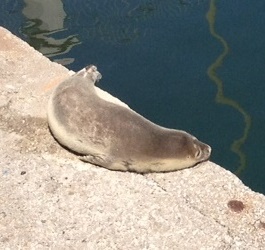
Monachus monachus.jpg
Mediterranean monk seal (source)
There are two types of monk seals. One is the Hawaiian, while the other is the Mediterranean monk seal.

Forgotten relative?

The Hawaiian monk is thought to have an extinct type of monk seal relative called the Caribbean monk seal.

Where exactly do Hawaiian monk seals live?

Their name gives away where Hawaiian monk seals live, but since Hawaii is made up of lots of islands. Here's a look at where exactly you will find Hawaiian monk seals...

Monks seals leave entirely in U.S. waters surrounding the Northwestern Hawaiian islands, primarily in the Papahānaumokuākea Marine National Monument area.  According to the Marine Mammal Center, there are six main breeding subpopulations in this area.


You'll likely find Hawaiian monk seals at:

  • Kure Atoll
  • Midway Islands
  • Pearl and Hermes Reef
  • Lisianski Island
  • Laysan Island
  • French Frigate Shoals


  • Did you know??

    Something cool about the Hawaiian monk seal is that they are the only seal native to Hawaii.

    The ancient Hawaiian name for Hawaiian monk seals, llio holo l ka uauameans "dog that runs in rough water."

    Monk seals get their name from their resemblance to monks... they have bald heads, sometimes have solitary habits, and they have a little fold of skin that looks like a monks hood!

    They spend much of their day sleeping and they hunt at night. They eat things like fish, lobster and octopus.

    Watch Hawaiian monk seals...

    Learn more about Hawaiian monk seals and what you can do to help them in this video from NOAA:


    Thanks for learning about Hawaiian monk seals with me!

    I think they are very interesting and cool! I feel we should do our part to protect them and I hope you do too!


    Read More »

    Thursday, March 30, 2017

    Sea Creature Spotlight: Parrotfish

    0

    This Sea Creature Spotlight is about the parrotfish. I like parrotfish because they are very colorful.

    Parrotfish (source)

    And you thought you had a lot of relatives!

    There are ninety-five types of parrotfish. You can find parrotfish living in waters through the world. They usually live in or near coral reefs because they eat coral (a bit more about this in a bit). If they were humans they sure would have a lot of birthday parties to remember with that many relatives! 😆


    About those teeth...

    Parrotfish (source)
    Something neat or interesting about parrotfish is that they have teeth that look a lot like human teeth. They use their teeth in order to chew coral.

    Parrotfish eat digestible parts of the reef, such as algae and then pass out the parts they cannot digest in the form of sand.

    Although these ocean beauties seem harmless if there are too many parrotfish living at a reef, though it can cause harm too the reef.


    A Mucous Sleeping Bag?


    Would you sleep in a in slimy sleeping bag at a sleep over? Bleh! I sure wouldn't!

    Believe it or not some parrotfish do! Some species of parrotfish actually surround themselves with a sort of mucous sleeping bag or cocoon at night.

    There are several theories as to why fish do this, but the most common thought is that the fish are protected by this slimy sleeping bag... most likely from predators.


    Thanks for swimming by and learning about parrotfish!

    I think parrotfish are cool and interesting sea creatures.The parrotfish is very cool in my thoughts although, if there are too many in an environment, they can become invasive.


    Read More »

    Sea Creature Spotlight: Hermit Crabs

    0


    Image result for hermit crabs
    Hermit Crab (source)
    This Sea Creature Spotlight is about the hermit crab. I like hermit crabs because they are very interesting and I find it cool how they wear shells to protect themselves. Also I think they are very interesting to watch.


    What Kinds of Hermit Crabs Are There?

    There are two types of hermit crabs. There are land hermit crabs and marine hermit crabs (marine means water).

    There are actually around one thousand, one hundred species of hermit crabs. You can find hermit crabs living in varying depths of saltwater and they rarely leave the water for land.  The land type, lives on land, so they don't go in the water that much. The land type can actually be kept as pets. If you want one as a pet, you can buy one at a pet store.


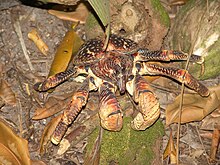
    Coconut Crab Birgus latro.jpg
    A Coconut Crab (source)
    And You Thought Your Relatives Were A Bit Nutty!

    Something neat or interesting about hermit crabs is that they are related to a species of crab called the coconut crab. This crab is so strong that it breaks open coconuts and eats them. They are like the 'Superman' of the crab world! 😄


    The Hunt for a New Home

    Since hermit crabs live in their shells, they have to get new ones every once in a while. No, it is not because they don't like to clean their rooms. They outgrow them! When a new shell washes up on the beach, the hermit crab takes it if it fits. Usually, the old one is taken by a new one.


    Did you know that when hermit crabs are looking for a new shell, they will sometimes line up in an orderly line by size? After lining up in order, they perform a sort of 'shell exchange' and hand their shell off and receive a new one. How cool is that?


    You can check this fun process out in this video from BBC Earth below:


    Thanks for swimming by...

    I think hermit crabs are amazing creatures. I hope as much fun reading about them as I did learning about them.

    Feeling Crabby?

    You could try and work a crab jigsaw puzzle in the Fun and Games section and see if it helps your mood!!

    Or, you could download this really fun Hermit Crab Coloring and Activity Book (PDF) from the University of Southern Mississippi Center for Fisheries Research and Development.


    Read More »

    Monday, March 27, 2017

    Sea Creature Spotlight: Manatees

    0


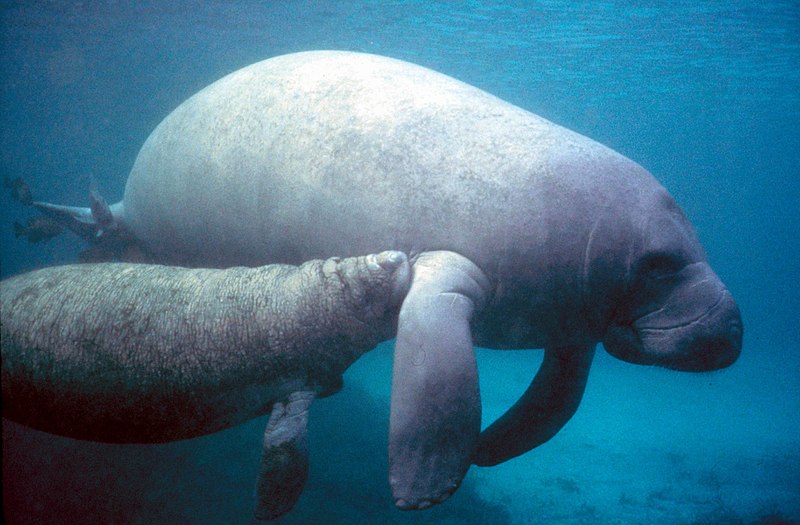
    Manatee (source)
    This Sea Creature Spotlight is about one of my favorite water mammals, the manatee.  I like manatees because I like that they seem to be gentle giants and I love their little wrinkled faces!

    On a family vacation our family went to Crystal River, FL and I had the chance to see manatees in real life! I will share more about that in another post because today I mainly want to share some facts with you about these fascinating creatures.


    What Kinds Of Manatee Are There?
     
    There are 3 types of manatee. They are:
    1. West Indian Manatee (this is the one that lots of people here in the U.S. are familiar with)
    2. Amazonian Manatee
    3. West African Manatee

    West African Manatee
    West African Manatee (Source)
    West Indian Manatee
    West Indian Manatee (Source)
    Amazonian Manatee
    Amazonian Manatee (Source)


    What Do They Look Like?
     
    Even though there are three different types of manatee, they all look pretty similar. All three species are large grayish-brown water mammals that have wrinkled skin that is covered in coarse hair. They have two front flippers and one back flipper. They have large whisker snouts and two widely spaced, circular eyes.
      
    About How Big Are Manatees?

    Manatee range from about 8 to 13 ft (2.4 to 4 m) long. Fully grown they weigh from about 440 to 1,300 lbs (200 to 600 kg). Baby manatee weigh about 40-50 pounds and they are around 39-40 inches long.


    Did you know? Looking at a manatee you might think that they are related to a seal or some other sea creature, but did you know the manatee's closest living relative is actually the elephant! Manatees evolved from a distant relative to the elephant over 50 million years ago!


    What Do Manatees Eat?

    Manantees are pretty much herbivores (plant eaters). They spend a big part of their waking hours grazing on plants along shorelines, as well as plants that grow floating on the water and plants that grow under (submerged) the water. They can eat anywhere from 10-15% of their body weight in just one day!

    Where Do Manatees Live?

    Manatee spend their entire lives in water. You can find manatee living near the coast of the Southeastern United States, coastal waters of the Caribbean, Amazon Basin and West Africa.

    You will find manatees in freshwater, saltwater and brackish water. Typically if a manatee lives in one type of water it will stay only in that kinds of water, but that's not the case for one particular type of manatee... Florida manatees are the only manatees that will move from freshwater to saltwater and back and not seem to mind it at all (this is one of my favorite manatee facts because I learned this when I went to visit the manatees in Crystal River, FL).

    How Do Manatees Breathe?

    Even though Manatees live in water, they are mammals and must breathe air. There large wrinkled snout that has a pair of nostrils that can be closed off when the manatee dives. Manatees normally breathe every 2 to 5 minutes, but can stay submerged for as long as 20 minutes if they need to.


    What's That Green Stuff Growing On Manatees?
      
    It's green alien goo!! No... it's algae! Algae likes to grow in wet and sunny spots and so manatees make a perfect home for algae. Why you ask? Well, because manatees live in shallow water and spend a lot of time up close to the surface (where the suns rays are) eating and breathing. The algae doesn't seem to bother manatee and some people even think it might offer some sun protection.  
     
    Fun Fact...

    Manatees are big and gentle and spend their days sort of mozying around eating grass and grazing all day. Remind you of any other sort of mammal? Did you think of a cow? Lots of other must have too because some people refer to manatees as sea cows!

    Are Manatees Endangered?

    Manatees have been on the endangered species list. Here's a bit about that from Wikipedia...

    "As of January 7, 2016, as a result of significant improvements in its population and habitat conditions, and reductions in direct threats, the U.S. Fish and Wildlife Service announced that the West Indian manatee is proposed to be downlisted from endangered to threatened status under the Endangered Species Act (ESA)."

     I hope though that people will still do what they can to protect manatee.

    Manatees do not have any natural predators. In nature, things like toxic algae blooms can affect manatee population. For the most part, threats to manatee are man made. One of the biggest threats to manatees are boat collisions. Since Manatees are slow movers and they spend most of their time shallow water, they can't move out of the way quickly if a boat is coming.

    Fortunately lots of people are working to slow down boats and educate boaters in an effort to help keep manatee safe, but there are still accidents happening. We saw manatee that had scars from boat propellers on our trip to Crystal River. Sometimes researchers even use these scars to catalog and identify manatee in an area.

    Cool Links & Where You Can Learn More...

    The Florida Fish and Wildlife Conservation Commission has a great information page where you can learn more about Manatees and you can also download a fun Manatee activity book.

    Watch Manatees From Your Home!

    There are several web cam set-up that will allow you to watch Manatees from the comforts of your very own home. Here are a few links that our family found:
    Read More »

    Saturday, February 21, 2015

    Sea Creature Spotlight: Sea Turtles

    0


    Thank you so much for coming to visit my new site! One of the ways I would like to share fun facts about sea creatures and ocean animals with you is by having a weekly 'Sea Creature Spotlight'. This week I wanted to tell you some facts about one of my favorite ocean animals, SEA TURTLES!

    I have not seen a sea turtle in the wild, but I have had been able to see a few up close at several aquariums. The turtles at the aquariums I have visited have been injured animals that were rescued. These turtles, even though they are all better, can no longer live out in the ocean because they can't do things as well as they could before their injury, things such as catch food or swim. I even helped feed the turtles when I went on a behind the scenes tour of the Tennessee Aquarium in Chattanooga.


    Here are a couple of pictures of turtles that I have seen over the past year:

    This turtle was at Gulf World Marine Park in Panama City Beach, Florida. Gulf Word Marine Park.
    And this was one of the two turtles that I got to help feed at the Tennessee Aquarium in Chattanooga, TN. 


    I like sea turtles because I think they look neat and I like the way they swim. Now let's splash into some learning with these neat SEA TURTLE facts!


    They have been around a long time: Sea turtles are believed to be some of the oldest creatures on Earth. Sea turtles have been around since the time of dinosaurs.

    They can live a long time: Sea turtles can have very long lives. Some can live to be 100 or more years old.

    There's not a lot of different kinds: There are only seven species of sea turtles. They are the leatherback, loggerhead, hawksbill, Kemp's ridley, olive ridley, flatback and green sea turtles.

    The sea is their home: Sea turtles spend their lives at sea. Once male sea turtles hatch and head to the ocean they stay there the rest of their lives. As for females they also spend a majority of their lives at sea and  they only come to shore in order to make a nest and lay eggs.

    They use flippers instead of feet: Sea turtles differ from land turtles because they have flippers instead of legs. This makes it where the female turtles have to sort of crawl when they come ashore to make a nest. Sea turtles have larger front fins than rear fins and these bigger front fins help them swim.

    They lay a lot of eggs: Female sea turtles lay a whole lot of eggs, usually anywhere from 80 to 150. The female turtle crawls up on shore and uses her fins to dig a nest and lay a bunch of eggs. They call the nest of eggs a clutch. They lay so many eggs because the baby sea turtles, which are called hatchlings, have to make it from the nest to the ocean. Sometimes hatchlings are attacked and eaten by predators or sometimes they do not survive. Having a whole bunch of eggs helps to make sure that there are a lot of new sea turtles.

    As you can see sea turtles are pretty amazing, which is why they are one of my favorite sea creatures!


    Read More »